

Female Silverrudd’s Blue Chicken (Isbar)
$9.99
Free shipping on orders over $50!
- Satisfaction Guaranteed
- No Hassle Refunds
- Secure Payments
Description
isbar silverudd blue chicken
isbar silverudd blue chicken is a calm, hardy chicken from Sweden, known for its blue-green eggs and gentle personality. It’s still uncommon in North America, which makes it appealing to keepers who want something different and productive. This guide covers the breed’s history, traits and care.
Where Does the Silverudd’s Blue Come From?
The breed was developed in Sweden by Martin Silverudd, a breeder who wanted a hardy, friendly chicken that laid blue-green eggs and suited small-scale farming. It remains a relatively young breed compared with long-established heritage chickens, and strains differ between breeders. Because it is rarer and less standardized than older breeds, always check how your hatchery describes its birds.
Silverudd’s Blue Quick Facts
| Trait | Details |
|---|---|
| Purpose | Dual-purpose (eggs primarily, with a decent table bird) |
| Size | Medium: hens roughly 5 to 6 lb, roosters roughly 6.5 to 8 lb |
| Egg color | Blue to blue-green |
| Egg production | Often around 180 to 200 eggs per year |
| Egg size | Medium to large |
| Temperament | Calm, friendly, easy to handle |
| Cold hardiness | Very good |
| Heat tolerance | Fair to good |
| Broodiness | Low to moderate |
| Plumage | Varies, often blue-gray to dark with some shading |
These are general figures. Strains and individual birds vary, so check each hatchery’s own breed description.
Appearance
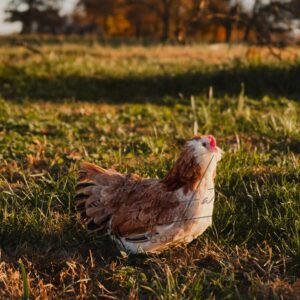
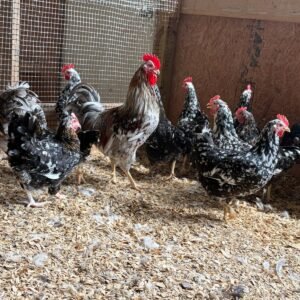
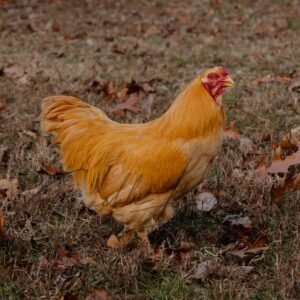
Silverudd’s Blues are sturdy, well-balanced birds with a medium frame. Plumage varies by strain, from slate-blue and gray to darker tones, and some birds show lighter or warmer shading. They typically have a single comb and an alert, upright stance. Because the breed isn’t tightly standardized, expect more variation than you would see in older heritage breeds.
The Blue Eggs
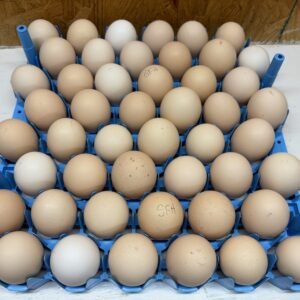
The main draw is the egg color. Hens lay blue to blue-green eggs, and the blue pigment runs through the shell, so the inside is blue as well. Shade can vary between hens and over a hen’s laying life, and eggs often lighten slightly as the season goes on. Pair them with brown egg layers and dark brown egg layers for a colorful basket, or browse more colored egg layers.
Temperament
This breed is known for being gentle and easy to manage. Silverudd’s Blues usually tolerate handling well, get along with other breeds and suit families and first-time keepers. Roosters are often calmer than those of many breeds, but every bird is an individual, so supervise young children around any rooster.
Are Silverudd’s Blues Good for Meat?
They’re a decent dual-purpose bird, though they won’t match the size of heavy meat breeds. Their medium frame gives a usable table bird for homesteaders who want eggs first and meat as a bonus. For fast, high-volume meat, look at meat and broiler chickens instead.
Climate and Hardiness
The breed originated in Scandinavia, and it handles cold well. A dry, draft-free coop is usually enough for northern winters, and you can browse more cold weather chickens. In hot climates, provide shade, ventilation and cool water, and look at hot weather chickens if summers are extreme.
Silverudd’s Blue vs. Other Blue Egg Layers
| Feature | Silverudd’s Blue | Cream Legbar | Olive Egger |
|---|---|---|---|
| Egg color | Blue to blue-green | Blue to turquoise | Olive green |
| Temperament | Calm, friendly | Active, can be flighty | Varies by cross |
| Type | Less standardized breed | Heritage breed | Hybrid cross |
| Cold hardiness | Very good | Good | Good |
| Breeds true | Mostly | Yes | No |
| Best for | Calm backyard flocks | Consistent blue eggs | Green egg variety |
If you want the calmest blue-egg layer, the Silverudd’s Blue is a strong choice. If you want standardized looks and consistent egg color, the Cream Legbar is the more established option.
Housing and Space
- Coop space: at least 4 sq ft per bird inside.
- Run space: 10 sq ft per bird or more.
- Nest boxes: about one box for every 3 to 4 hens.
- Predator protection: secure fencing and a locked coop at night.
Browse chicken coops and transports, feeders and waterers before your birds arrive.
Raising Silverudd’s Blue Chicks
| Age | Brooder temperature | Notes |
|---|---|---|
| Week 1 | 95°F | Provide clean water and starter feed |
| Week 2 | 90°F | Reduce heat gradually |
| Week 3 | 85°F | Check for pasty butt |
| Week 4 | 80°F | Add more space |
| Weeks 5 to 6 | 75°F | Prepare for feathering out |
See brooder equipment for heat sources and supplies, or hatch your own with hatching eggs and an incubator.
Where to Get Silverudd’s Blue Chickens
Rare breeds sell out quickly and availability changes through the year, so order early. Start with baby chicks or browse rare chicken breeds. For small flocks, see the small order specials and weekly specials. More advice is on the Cackle Hatchery blog.
Frequently Asked Questions
What color eggs do Silverudd’s Blues lay?
Blue to blue-green eggs, with some variation between hens.
How many eggs does a Silverudd’s Blue lay?
Often around 180 to 200 per year, depending on strain and care.
Are Silverudd’s Blues friendly?
Yes. They’re known for calm, gentle personalities.
How big do they get?
Hens are usually 5 to 6 lb and roosters 6.5 to 8 lb.
Are they cold hardy?
Yes. The breed comes from Sweden and handles cold well.
Are the eggs blue inside too?
Yes. Blue pigment goes through the whole shell.
Are Silverudd’s Blues good for beginners?
Yes. They’re calm, friendly and easy to care for, though availability can be limited.
Ready to Start Your Flock?
Explore the full poultry catalog and find birds that fit your space, climate and goals.
Additional information
| Vaccinate | Yes |
|---|
Reviews
There are no reviews yet.